
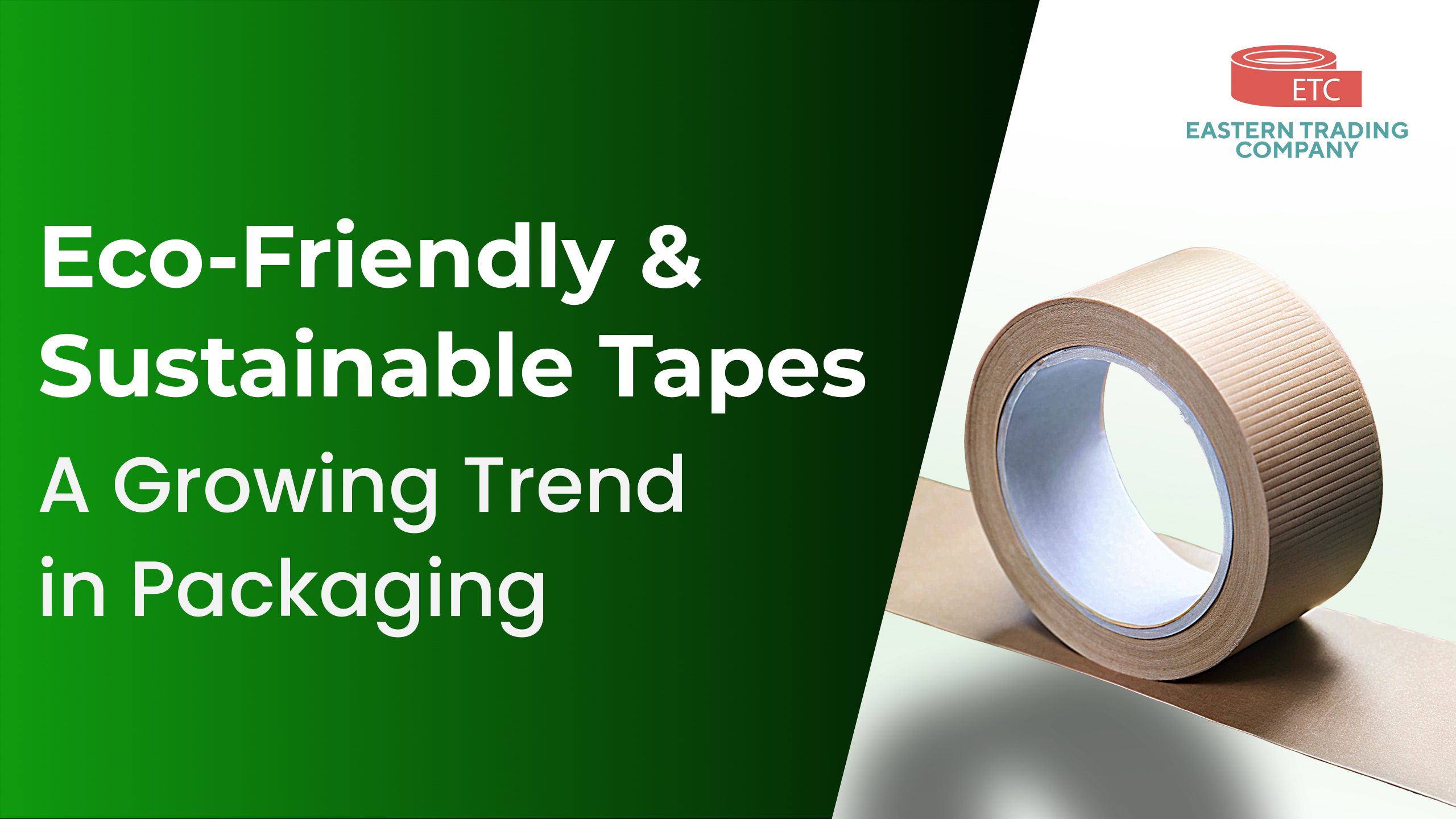
Still considering packaging to be equivalent to protection?
Well, given today’s growing gravitation towards sustainability, packaging has become the testament of a brand’s commitment towards eco-friendliness. The narrow strip sealing a carton speaks volumes about responsibility, intent, and practicability. As consumers scrutinize every smallest component they buy, packaging materials are under the microscope like never before. Among them, adhesive tapes— a once-overlooked component— have emerged as a potent lever to adapt to eco-friendly change.
Whether it’s about reducing plastic wastage or supporting recyclable packaging systems, eco-friendly & sustainable tapes have an indispensable role to play. In other words, these are reshaping how businesses ship, store, and deliver goods to the final destinations. Trends alone aren’t driving this shift. Rather, it’s fuelled by customer expectations, stringent regulations, and long-term cost efficacy goals. That being said, let’s unravel why eco-friendly tapes are gaining remarkable momentum in the packaging industry.
Why Package Sustainability Shifted from “Nice to Have” to “Non-Negotiable”?
There’s no doubt that sustainability in packaging has transcended the state of being a mere option. Consumers, governments, and global brands have shown an increasing inclination towards measurable environmental responsibility. Some of the key factors influencing this shift are:
- Rising waste management expenses for non-recyclable materials
- Stringent environmental regulations targeting single-use plastics
- Consumer preferences for responsible brands, especially across the e-commerce sector
- Corporate ESG goals are tied to every supply chain decision
Packaging tapes, widely used across almost every industry, play a critical, undeniable role in balancing this equation. Replacing conventional plastic-based tapes with eco-friendlier ones can cut down a company’s environmental footprint significantly without disrupting day-to-day operations.
The Hidden Environmental Cost of Conventional Packaging Tapes
Traditional packaging tapes, especially the ones manufactured with solvent-based adhesives and plastic film, come with environmental drawbacks that often remain hidden behind the curtains. Some common challenges that go unnoticed until the very end are:
- Dependence on petroleum-based raw materials
- Difficulty in recycling cartons due to plastic tape contamination
- Long degradation timelines contribute to landfill overflow
- Manufacturing workflows associated with a high carbon footprint
While a single roll usage might seem to be insignificant, multiply it by thousands of shipments per day, and the impact won’t be ignorable any longer. Once this realization settles in, businesses are compelled to rethink even the smallest component of their packaging processes.
What Makes a Packaging Tape Truly “Eco-Friendly”?
Not all “eco-friendly & sustainable tapes” are created equal. True environmental friendliness lies in the material choice, adhesive formulation, and end-of-life impact. That’s why the green tapes usually put more emphasis on:
- Seamless compatibility with recycling processes
- Paper-based backing replacing plastic films
- Natural or water-activated adhesive layers
- Reduced or plastic-free composition
The goal here isn’t just to achieve biodegradability— it’s about ensuring the tape can complement sustainable packaging systems, rather than hindering them.
Paper-Based Tapes: Redefining Strength with Sustainability
Paper tapes have emerged as a standout solution in a sustainable packaging approach. Unlike the plastic alternatives readily available in the market, these seamlessly integrate with corrugated boxes during recycling. Key advantages of investing in these paper-based, eco-friendly & sustainable tapes are:
- Tamper-evident sealing for added security
- Strong adhesion to cardboard surfaces, both even and uneven
- Natural, premium-grade aesthetics
- Clean recycling without tape removal
Water-activated tapes, in particular, form a strong, permanent bond with cartons, thereby reducing dependencies on excess materials while enhancing packaging integrity by several notches.
Reinforced Paper Tapes: When Durability Meets Responsibility
Achieving sustainability doesn’t have to come at the price of compromised performance. Reinforced paper tapes stand as a testament to the fact that eco-friendly options can seamlessly handle high-stress operations without slowing down operational speed. Below are a couple of reasons that will explain why these tapes have gained such immense traction lately.
- Reduced carton failure during transportation
- Fibreglass reinforcement adds remarkable tensile strength
- Suitable for heavy or high-value shipments
- Maintains the recyclability of corrugated packaging
Owing to these plus points, reinforced paper tapes have become immensely valuable in export, industrial, and bulk shipping scenarios— areas where reliability is non-negotiable.
Kraft Paper Tapes and Brand Perception: More Than Just Sealing Boxes
Eco-friendly tapes don’t just serve a mere functional purpose— they fortify and enhance brand storytelling. If we talk about a customer’s perspective, here’s what these components mean.
- Paper tapes unequivocally signal environmental responsibility.
- Natural textures impart a premium unboxing experience.
- Printed paper tapes reinforce branding while cutting off reliance on plastic tapes.
In today’s digitized age, defined by unboxing videos and social sharing, packaging tapes will contribute to brand recalls like never before. Sustainable packaging choices seamlessly resonate with environmentally aware customers, thereby influencing repeat purchases most often.
The Role of Adhesives in Sustainable Packaging
Although often overlooked, adhesives play a crucial role in determining whether a tape can be considered eco-conscious and sustainable. Here’s how.
- Water-based formulations cut off dependency on toxic chemical compositions.
- Chemical emissions are reduced during the application process.
- These sustainable adhesives are safe to handle and dispose of.
- They form strong bonds without requiring any excess material.
Water-activated adhesives, for instance, eliminate the need for pressure-sensitive plastics while delivering a superior carbon bonding feature. Thanks to this stellar combination of performance and responsibility, industries are increasingly adopting sustainable adhesives for packaging tapes.
Cost Efficiency: the Long-Term Business Case for Eco-Friendly Tapes
A common misconception is that eco-friendly & sustainable tapes can leave a huge dent on the pocket. However, that’s not the case, and here’s how.
- Stronger seals reduce product damage and unnecessary returns.
- Efficient bonding lowers tape usage per carton.
- Simplified recycling cuts waste management expenses.
- Compliance adherence avoids regulatory penalties.
Conclusion
Investing in eco-friendly & sustainable tapes is no longer a niche-based choice— it has become the standard for responsible and accountable packaging. With businesses seeking smarter ways to reduce their carbon footprint without sacrificing performance, tape manufacturers in Ahmedabad like ETC Tape World have come to the forefront with their stunning solutions. Thanks to their comprehensive product range, their tapes are designed to cater to modern performance and environmental expectations. Make the switch today and seal every carton with purpose!